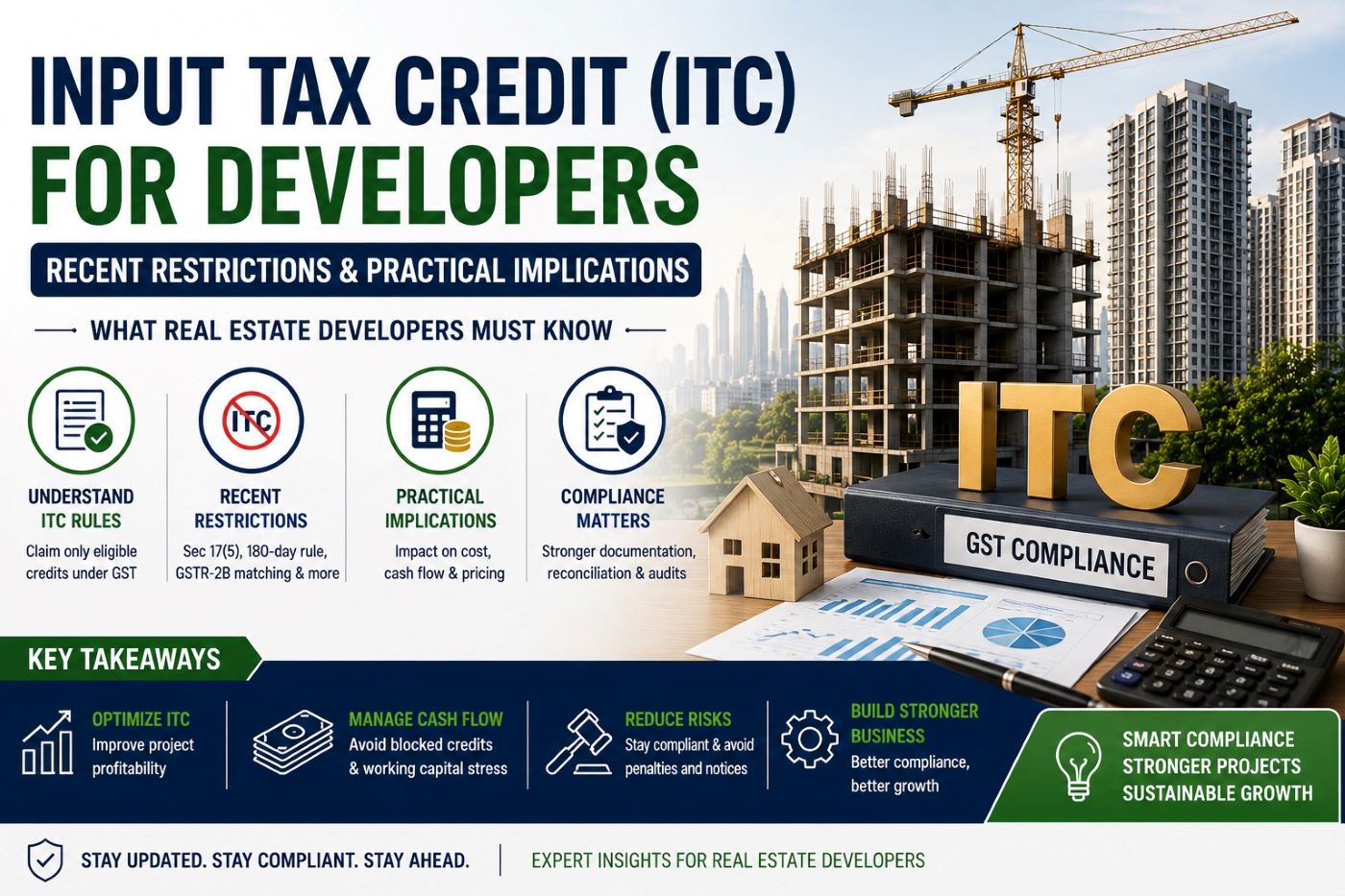
Input Tax Credit (ITC) for Developers – Recent Restrictions & Practical Implications
Input Tax Credit (ITC) is one of the most critical aspects of GST for the real estate sector. For developers and builders, ITC directly impacts:
• Project cost
• Cash flow
• Pricing strategy
• Profitability
However, recent GST changes, tighter compliance norms, and restrictions on ITC claims have significantly changed how developers manage taxation and working capital.
Understanding these changes is essential for every real estate developer and investor.
What is Input Tax Credit (ITC) Under GST?
Input Tax Credit allows businesses to claim credit for GST paid on purchases used for business purposes.
For developers, this includes GST paid on:
- Cement
- Steel
- Contractor services
- Architectural & consultancy services
- Construction materials
ITC helps avoid double taxation and reduces overall tax liability.
Why ITC is Important for Real Estate Developers
In real estate projects, input costs are massive. Without ITC:
• Tax burden increases
• Working capital gets blocked
• Project profitability reduces.
Efficient ITC planning can significantly improve cash flow management.
Major ITC Restrictions Developers Must Know
Recent GST compliance tightening has made ITC claims more restrictive.
1. ITC Allowed Only if Reflected in GSTR-2B
Developers can now claim ITC only when invoices appear in GSTR-2B.
If suppliers:
- Delay filing GSTR-1
- Upload incorrect invoices
…the developer’s ITC gets blocked temporarily.
This has made vendor compliance monitoring extremely important.
2.Provisional ITC Effectively Removed
Earlier, businesses could claim provisional ITC in some situations.
Now:
- Reconciliation with GSTR-2B has become mandatory
- Unmatched credits may lead to notices and reversals
Developers must now maintain stronger documentation and reconciliation systems.
3. 180-Day Payment Rule
If payment to supplier is not made within 180 days:
- ITC must be reversed
- Interest liability may apply
For developers with delayed project cash flows, this creates additional compliance pressure.
4. Blocked Credits Under Section 17(5)
Certain expenses remain permanently blocked from ITC claims.
Examples include:
- Certain motor vehicles
- Employee-related personal consumption expenses
- Some immovable property restrictions
Incorrect claims can result in penalties and interest.
Practical Implications for Real Estate Developers
1. Increased Project Costs
Blocked or delayed ITC directly increases construction cost.
Developers may:
• Absorb the cost
OR
• Pass the cost to buyers
This affects overall project pricing.
2. Working Capital Pressure
When ITC gets delayed:
- GST liability must still be paid
- Cash flow becomes tighter
This especially impacts:
• Mid-sized developers
• Ongoing residential projects
3. Vendor Dependency Risk
A developer’s ITC claim now depends heavily on supplier compliance.
If suppliers:
- File late
- Make invoice errors
…the developer suffers the credit blockage.
Vendor due diligence is now critical.
4. Increased Litigation & Notices
GST authorities are closely scrutinizing:
• Excess ITC claims
• Mismatches
• Incorrect reversals
Improper ITC management may lead to:
- GST notices
- Interest liabilities
- Penalties
Recent GST Compliance Tightening
Recent GST developments indicate stricter compliance enforcement:
- Auto-populated return validation
- Invoice matching systems
- Invoice Management System (IMS) integration
- Reduced flexibility in GST return corrections
Developers must invest in stronger accounting and GST reconciliation systems.
Smart ITC Management Strategies for Developers
Successful developers now focus on:
- Monthly GSTR-2B reconciliation
- Strong vendor compliance tracking
- Timely supplier payments
- Legal review of blocked credits
- Internal GST audit systems
ITC management is now a strategic financial function—not just accounting compliance.
Impact on Homebuyers & Investors
Many investors don’t realize that ITC restrictions indirectly affect them too.
When developers face:
• Higher taxation
• Working capital pressure
…it may result in:
- Increased property prices
- Delayed projects
- Reduced margins
GST compliance now impacts the entire real estate ecosystem.
Final Verdict
Input Tax Credit remains one of the most important financial tools for developers under GST—but recent restrictions have made compliance far more complex.
The new reality is:
- ITC is no longer automatic
- Documentation & reconciliation are critical
- Vendor compliance directly affects developers
Developers who proactively manage GST compliance will maintain stronger profitability and lower legal risk.