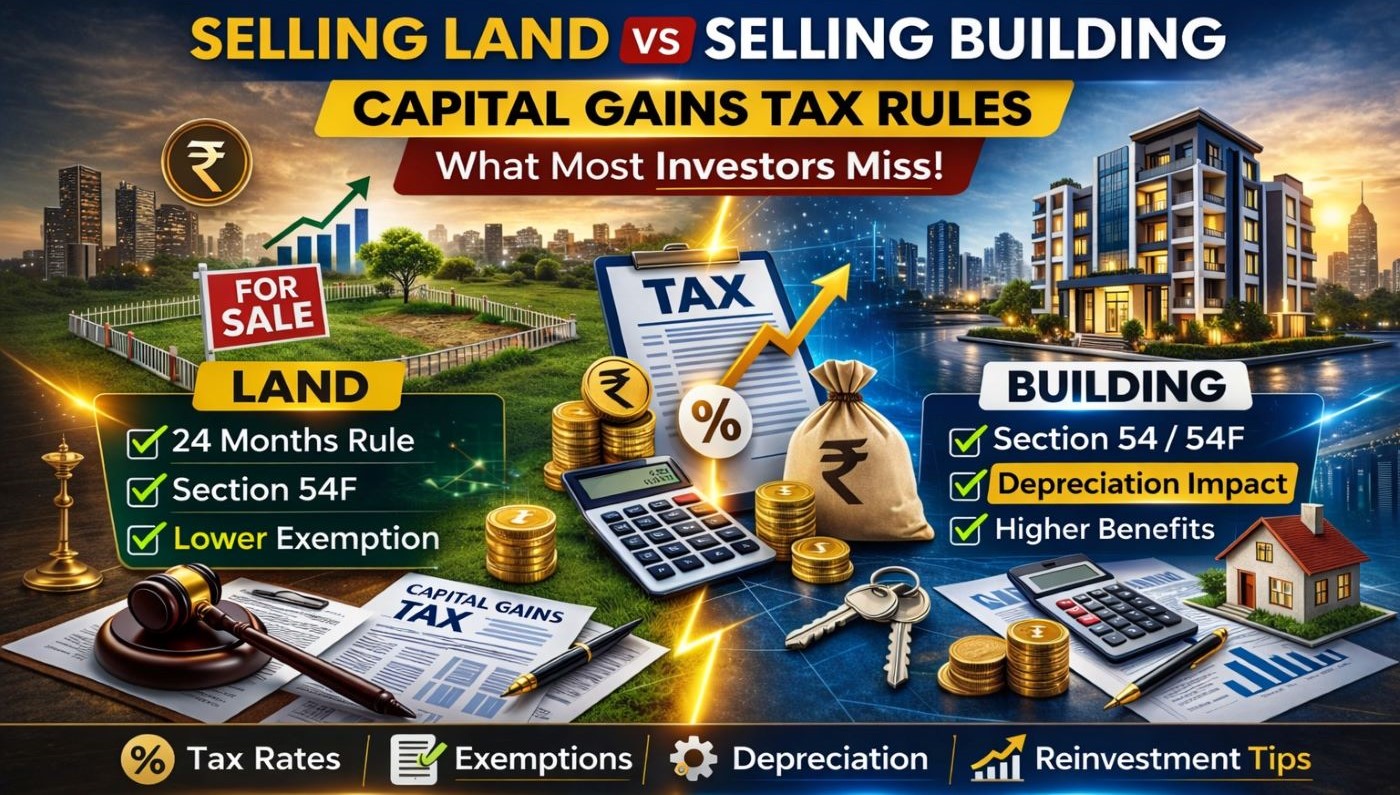
Real estate investors often assume that selling land and selling a building are taxed the same way. In reality, capital gains rules differ significantly, and misunderstanding them can lead to higher tax outgo or lost exemptions. This guide explains the key differences every property owner, investor, and tax planner must know.
1. What Is Considered “Land” vs “Building” for Tax Purposes?
Under the Income-tax Act, real estate is classified as a capital asset, but taxation depends on what is being transferred:
- Land only: Sale of a vacant plot or undivided land.
- Building with land: Sale of a constructed property (residential or commercial), where land is incidental to the building.
This distinction impacts holding period, exemptions, depreciation treatment, and reinvestment options.
2. Holding Period: Land vs Building
Selling Land
- Short-Term Capital Gain (STCG): Held for 24 months or less
- Long-Term Capital Gain (LTCG): Held for more than 24 months
Selling Building
- Same holding period rule (24 months)
- However, nature of use (self-occupied, rented, business asset) changes tax treatment
Key Insight: While holding period is identical, tax benefits after sale differ sharply.
3. Capital Gains Tax Rates Compared
Long-Term Capital Gains (Both Land & Building)
- Tax rate: 20% + surcharge + cess
- Indexation benefit: Available for both
Short-Term Capital Gains
- Added to total income
- Taxed as per individual slab rates
4. Exemptions Available – Where Most Investors Go Wrong
Selling Land – Limited Exemptions
- Section 54F:
- Sale of land
- Reinvestment must be in one residential house only
- Section 54EC:
- Invest up to 50 lakh in capital gains bonds
Section 54 not available for land sales.
Selling Building – More Flexibility
Residential Building
- Section 54:
- Sell residential house
- Buy or construct another residential house
- Section 54EC: Capital gain bonds
Commercial Building
- Section 54F (conditions apply)
- Section 54EC
Missed Opportunity: Many investors sell a residential building but wrongly use Section 54F instead of Section 54, leading to unnecessary conditions.
5. Impact of Depreciation (Critical for Commercial Buildings)
If the building was:
- Used for business or profession
- Depreciation claimed
Then:
- Capital gain becomes Short-Term, even if held for decades
- Known as deemed STCG under Section 50
- Indexation benefit not allowed
This rule does NOT apply to land, as land is not depreciable.
6. Cost Allocation: Land + Building Sold Together
When land and building are sold as one unit:
- Cost must be split between land and building
- Land portion → normal capital gains
- Building portion → may attract depreciation rules
Poor cost bifurcation can trigger tax disputes and notices.
7. Tax Planning Tips Investors Rarely Use
- Sell land separately if exemption planning is weak
- Use valuation reports to allocate land vs building cost
- Prefer Section 54 over 54F when selling residential property
- Time the sale to maximize indexation benefits
- Plan bond investment (54EC) within 6 months
Conclusion
Selling land and selling a building may look similar, but capital gains taxation is fundamentally different. The right classification can save lakhs in tax, while a wrong one can wipe out returns. Smart investors plan before signing the sale deed, not after receiving the tax notice.